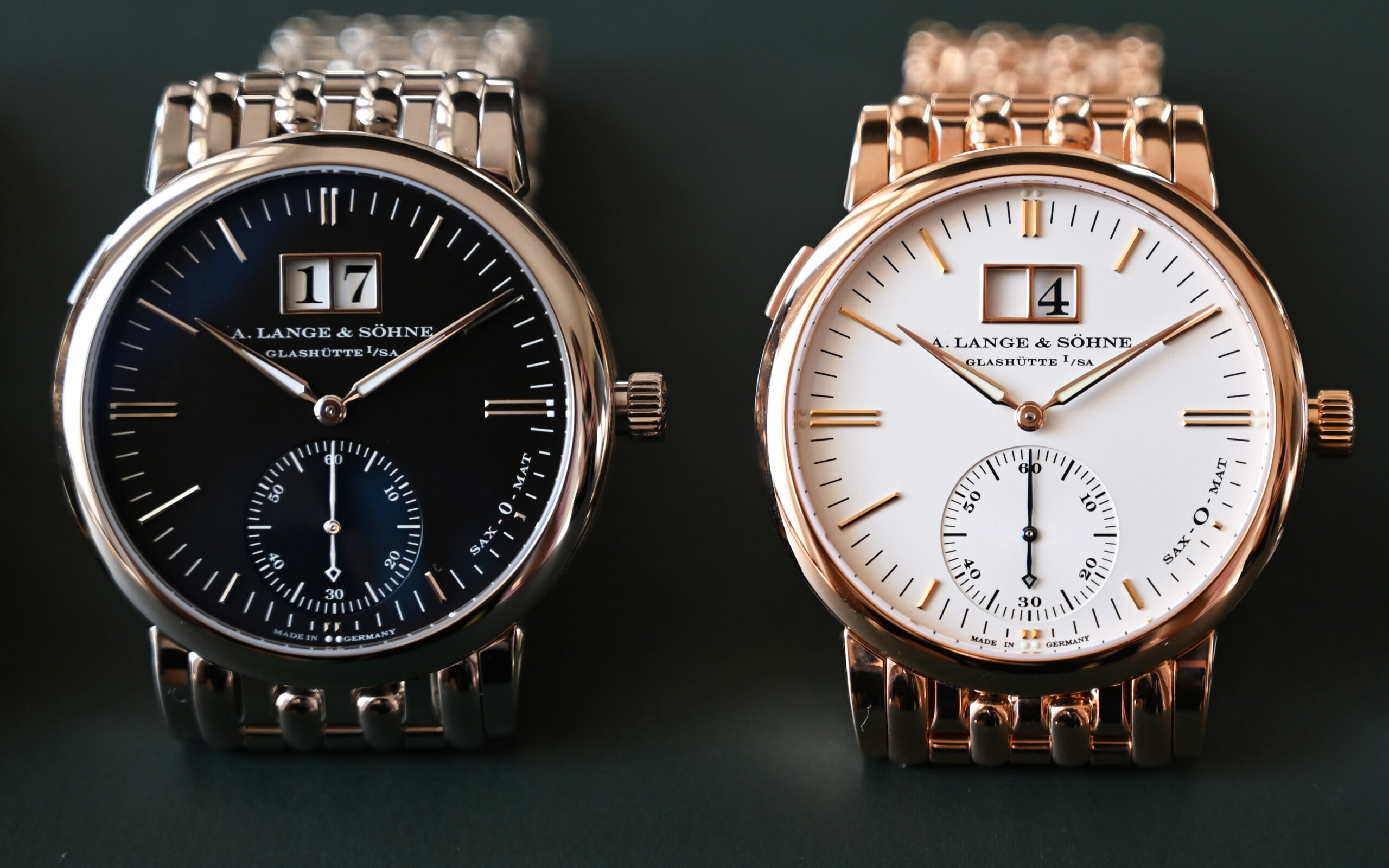
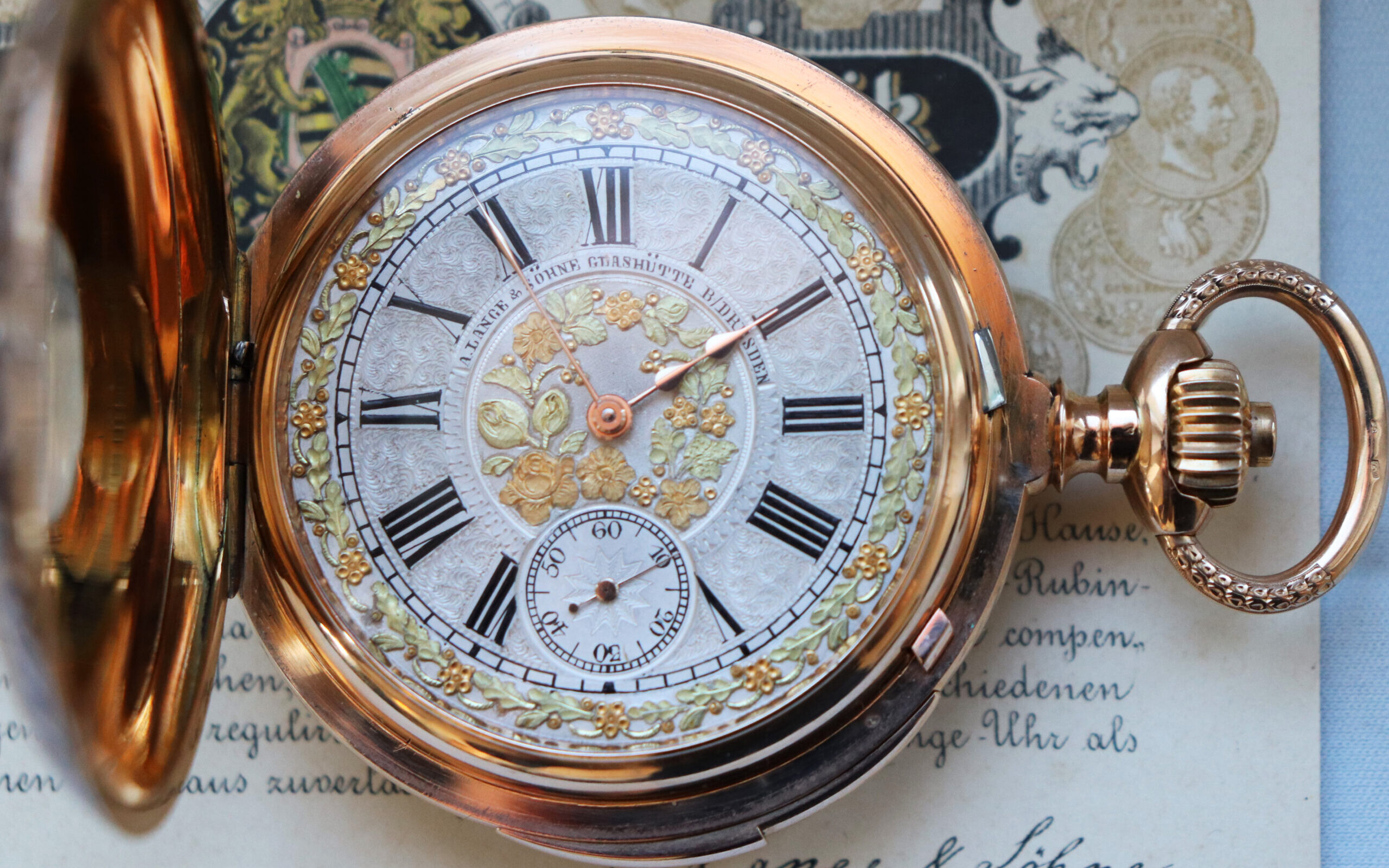
There is soul in some designs. It’s not just functionality, how it looks, or how comfortable it is, but how it feels—the combination of all these elements in the thing you are seeking. When that variable in the equation changes, there is often discomfort or outrage, even if the change is for the better.
Remember the 964-generation 911 in 1990? I don’t, as I wasn’t born yet, but I’ve learned about it through conversations and forums. What an outrage it caused when Porsche debuted the Tiptronic automatic transmission. The raw, uncompromising driver engagement was deemed gone, unfit for the soul of Porsche. Why? Because these were road-legal racing machines that shouldn’t have anything that took power from the driver’s hands. The manual transmission, and all the discomfort associated with Porsche’s 911 series, were part of the equation that resulted in its iconic and enduring spirit. Even today, most purists will say the hell with your incredibly superior double clutch; just give me old-school so I can rev and drive this thing as I want.
This automotive conflict finds its watch-world counterpart in the Lange 1, A. Lange & Söhne’s undisputed icon. The stakes are just as high. It has everything a purist would want in a high-end mechanical wristwatch: an inimitable dial, a signature case, and a stunning hand-wound movement inspired by 19th-century pocket watches. But how do you develop it further? That’s the big question. A. Lange & Söhne tried many variants on the sacred Lange 1 canvas, from the Lange 1 Tourbillon to the Time Zone, to changing the size with the Grand or Little Lange 1. None of these gems became a platform, though, as they weren’t challenging or differentiating enough. Then in 2010, the unspeakable happened. A. Lange & Söhne took the Lange 1, mirrored its dial, and powered it with a self-winding movement. Thus, the Daymatic was born. No more manual transmission, and it was like suddenly driving in left-handed traffic.
You can see the division among enthusiasts at the time by time-traveling through forums. Some were very excited: the Lange 1 was finally getting an update, and with a self-winding movement, no less. Others were straight-up declining, questioning how the design could be touched and the movement altered. Well, even daring something like this on your most important line is commendable. Lange did just that, and I think it works!
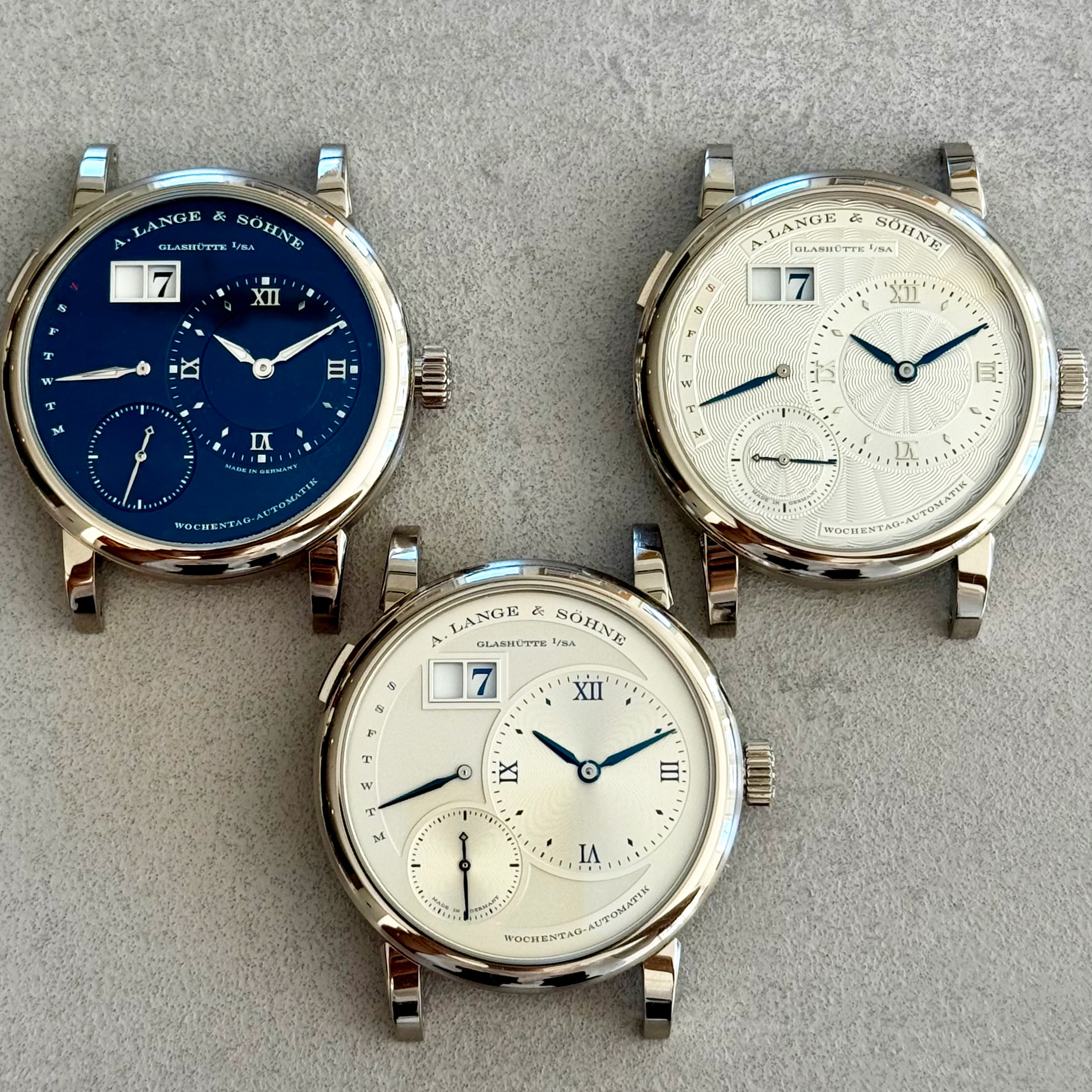
Three of the most special Daymatic. Courtesy of @lelangelust
The Daymatic was launched in 2010, alongside the debut of honey gold with the 165th Anniversary set and the Zeitwerk “Phantom” Lumen. What a tough crowd to be a part of, but even then, the excitement was high. It came in an updated size of 39.5 mm in diameter and 10.4 mm thick, retaining the signature case design with three steps and alternate finishes: polished, brushed (except the pink gold), and polished. It is only 0.6 mm thicker and 1 mm wider, so you don’t actually feel much of a difference on the wrist compared to the L1.
Throughout the years, the Daymatic, albeit quietly, was produced in numerous combinations. Some reflect classic Lange restraint, while others are straight-up showing off, better suited to the collection’s daring spirit. Below is a list of A. Lange & Söhne Daymatic production and years:
- 320.021: Yellow gold / champagne dial. Production: 2010 – 2020
- 320.025: Platinum / rhodium dial. Production: 2010 – 2020
- 320.028: White gold / blue dial. Production: 2017 – 2020
- 320.032: Pink gold / silver dial. Production: 2010 – 2020
- 320.040: White gold / silver guilloche dial. Japan Edition, 20 pieces
- 320.047: White gold / blue dial. Oeding-Erdel Edition, 11 pieces.
- 320.050: Honey gold / brown dial. 250 Pieces. Production: 2025 – ?
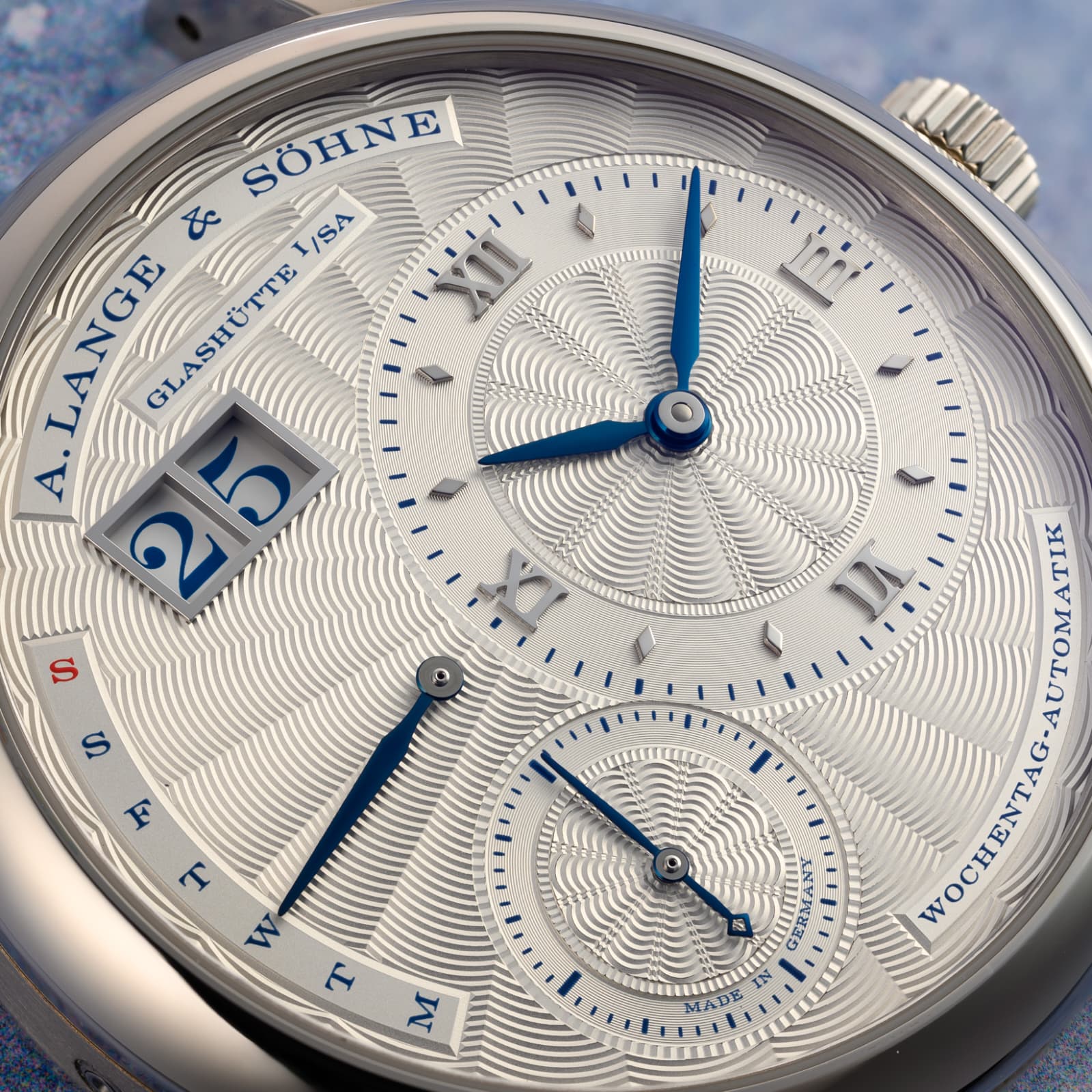
- 320.066: White gold / silver dial, blue hands. 25th Anniversary Edition, 25 pieces.
- 320.836: Platinum case, baguette diamond bezel / black dial. Hourglass Edition, 3 pieces.
Despite such lengthy production and a sizable number of pieces, you don’t see many Lange 1 Daymatics pop up in auctions or the market. I sincerely believe the fundamental reason is that most Lange or watch enthusiasts are simply unaware of the existence or specialty of this collection, hence causing a lack of activity. According to my data, the most frequently seen edition is the 320.028 with a blue dial, despite having much lower production numbers compared to the rest of the standard editions.
It is understandable that the Daymatic is positioned against the classic Lange 1, making it an after-thought for most collectors. However, this is an entirely different watch, and it has a lot to show for it.
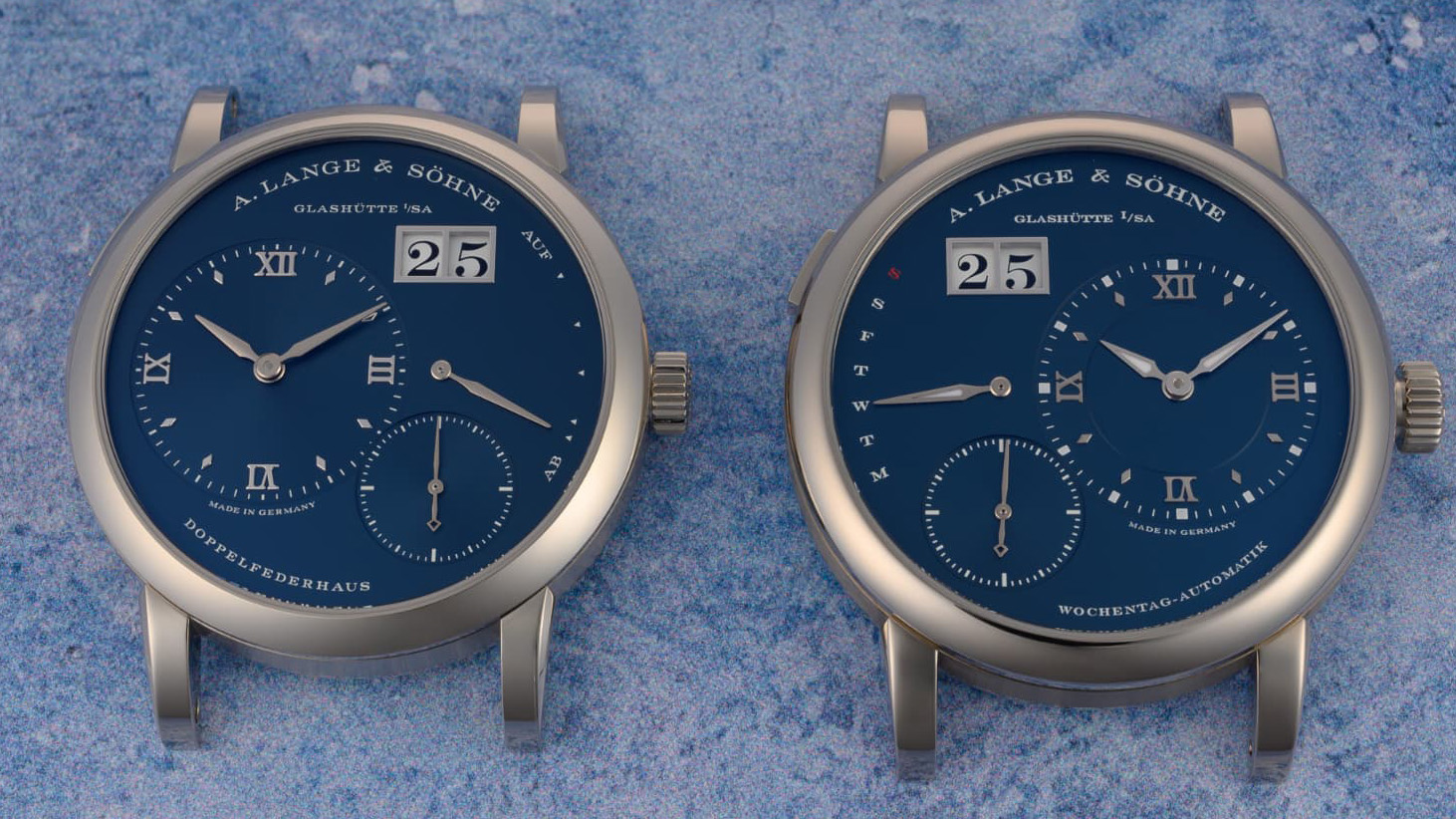
Side by side: Lange 1 vs Daymatic with blue dial. 191.028 v 320.028.
The Daymatic’s dial structure is mirrored from the Lange 1. It features the same proportions, font, and almost the same finish. To be frank, I find the overall concept of mirroring the watch, both in design and movement, extremely clever and industrious. Lange could have just flipped the movement and called it a new reference, as we have seen done even with split-second perpetual calendar pieces, but no. This is the better way.
At first look, it feels weird, I have to say that. Weird in the sense that for years all you have seen is the classic, main Lange 1. And then this one appears, and you think: “Oh. Is something wrong?” Trust me, the same thing also happened to me for quite a while every time I looked at a Little Lange 1, especially the first generation with the 36.1 mm case.
Then you realize the subtle tweaks and appreciate the watch for what it is. The Daymatic is a watch for people who wouldn’t be bothered to manually wind a watch, and for those who are a bit rebellious, who want something outside of the classic lines.
The two most striking differences you’ll notice are that the Daymatic features much deeper and broader concentric circles within the sub-dials, whereas the classic Lange 1’s finish is much more subtle. This provides greater contrast for the Daymatic, separating the main and sub-dials more strongly.
The other difference is the replacement of relevant text; for example, Wochentag-Automatik (Days of the Week – Automatic) instead of Doppelfederhaus (Double Barrels). Naturally, the jumping retrograde day-of-the-week indicator also replaced the power reserve indication. Please note the differences above are limited to standard collection references 310.021, 310.025, and 310.032. A. Lange & Söhne is much more adventurous and fun with special edition Daymatic pieces, from the lume and different textures on the 310.028 to the Lange 1A-reminiscent Ginza Edition.
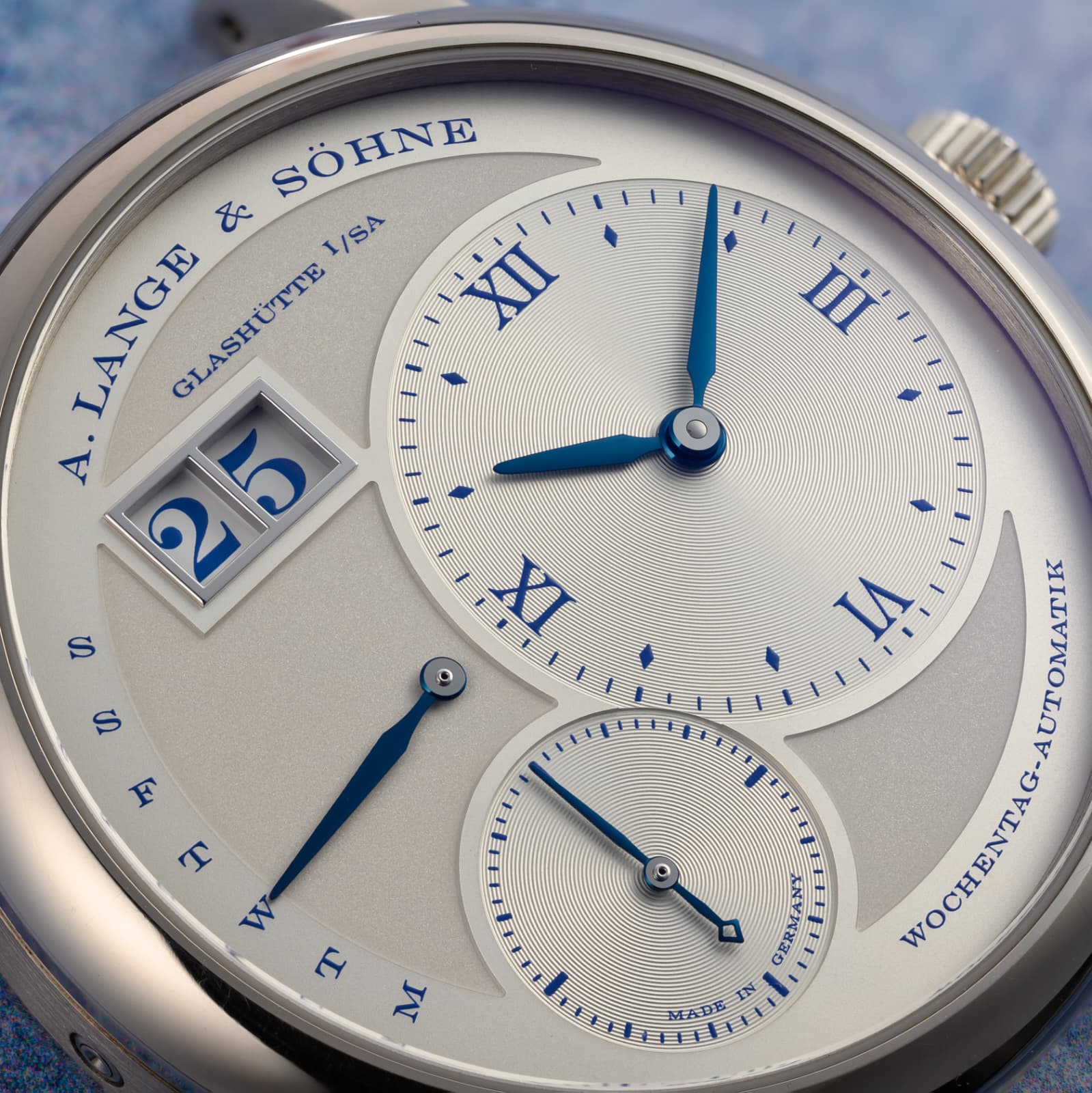
The “25th Anniversary” Edition. Note the wider circles, and the anniversary special dipped dials.
Turning the Daymatic over, we see the real difference.
The caliber L021.1. The code tells us that the movement was conceived in 2002 but did not see the light of day until 2010. It is only the second self-winding movement A. Lange & Söhne developed until then, compared to tens of other manually wound calibers. The Daymatic’s movement also differs from the legendary Sax-0-Mat. It uses a more traditional self-winding movement architecture instead of the three-quarter rotor of its predecessor. Yet, it is no less impressive.
This is the first full-rotor movement from the brand, and it is as you would expect from A. Lange & Söhne: heavy, engraved, and simply over the top. The outer rim is made of platinum for winding efficiency, attached to a thick solid gold part with generous relief engraving. The central portion is made of ARCAP alloy for rigidity and to steadily hold the extra weight of the solid gold and platinum. It is lovingly skeletonized to reveal the bridges, ribbings, chatons, and jewels beneath.
Speaking of bridges, please note that the construction is significantly different from the traditional Lange calibers with a massive three-quarter plate. With the Daymatic, we observe four separate bridges that almost fit together like puzzle pieces, with minimal openings. While the traditional energy flow can be followed with jewels as noted above, the Daymatic requires two extra gears to accommodate the unconventional layout for the sub-seconds, placed exclusively with the bridge carrying the escape-wheel.
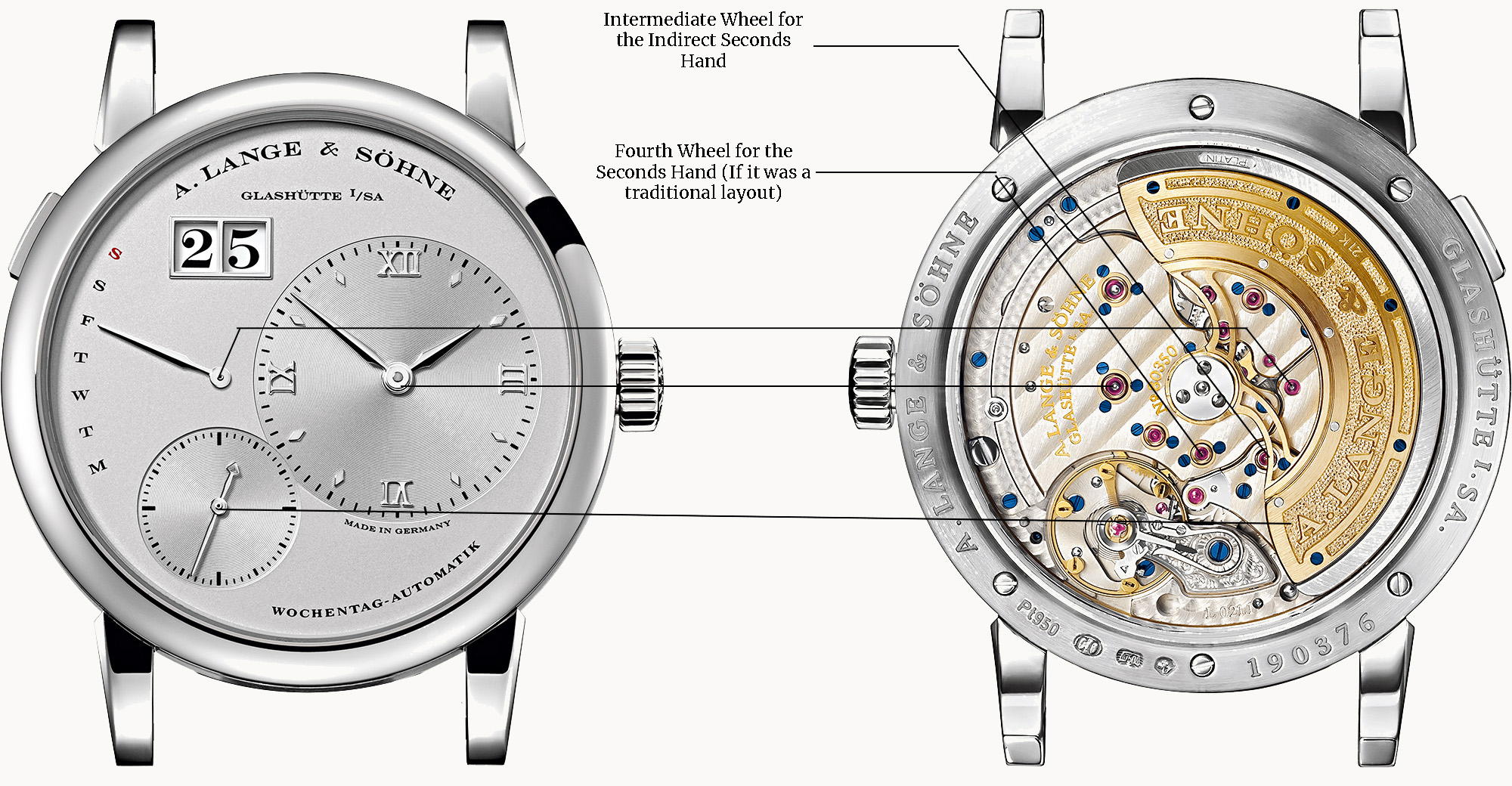
The far-right bridge carries the retrograde date system with the snail cam and hand; the one above it is designed for the big-date mechanism. We saw A. Lange & Söhne putting all the gears under one three-quarter plate in self-winding movements such as the L086.1, but the Daymatic’s unique layout, and thus the caliber L021.1, simply does not allow that. Plus, doesn’t it look way cooler?
All this re-arrangement, as opposed to just doing the genius move like Patek Philippe’s transformation from the 5372 to the 5373, comes at the cost of only 1 mm more thickness compared to the classic Lange 1. That is nothing short of an exquisite achievement of engineering, adorned with exceptional finish and color palette. That, ladies and gentlemen, is A. Lange & Söhne, and the Daymatic is one of its most well-kept secrets.
Finish-wise, we don’t see anything extravagant, for Lange standards, of course. The ribbing is, as always, executed with depth, capturing and playing with the light perfectly. The chatons, blued screws, free-hand engraved balance cock, flat-polished escape wheel cap, and that magnificent rotor are all there. And yet, here I am being displeased that there aren’t myriads of sharp angles. How spoiled am I? That’s Lange’s fault for detaching me from reality.
A level above this mechanism, both in finish and engineering, can be observed in the Lange 1 Perpetual and Lange 1 Perpetual Tourbillon. The Daymatic forms the base of the self-winding Lange 1 collection, and as you go up, it only gets better.
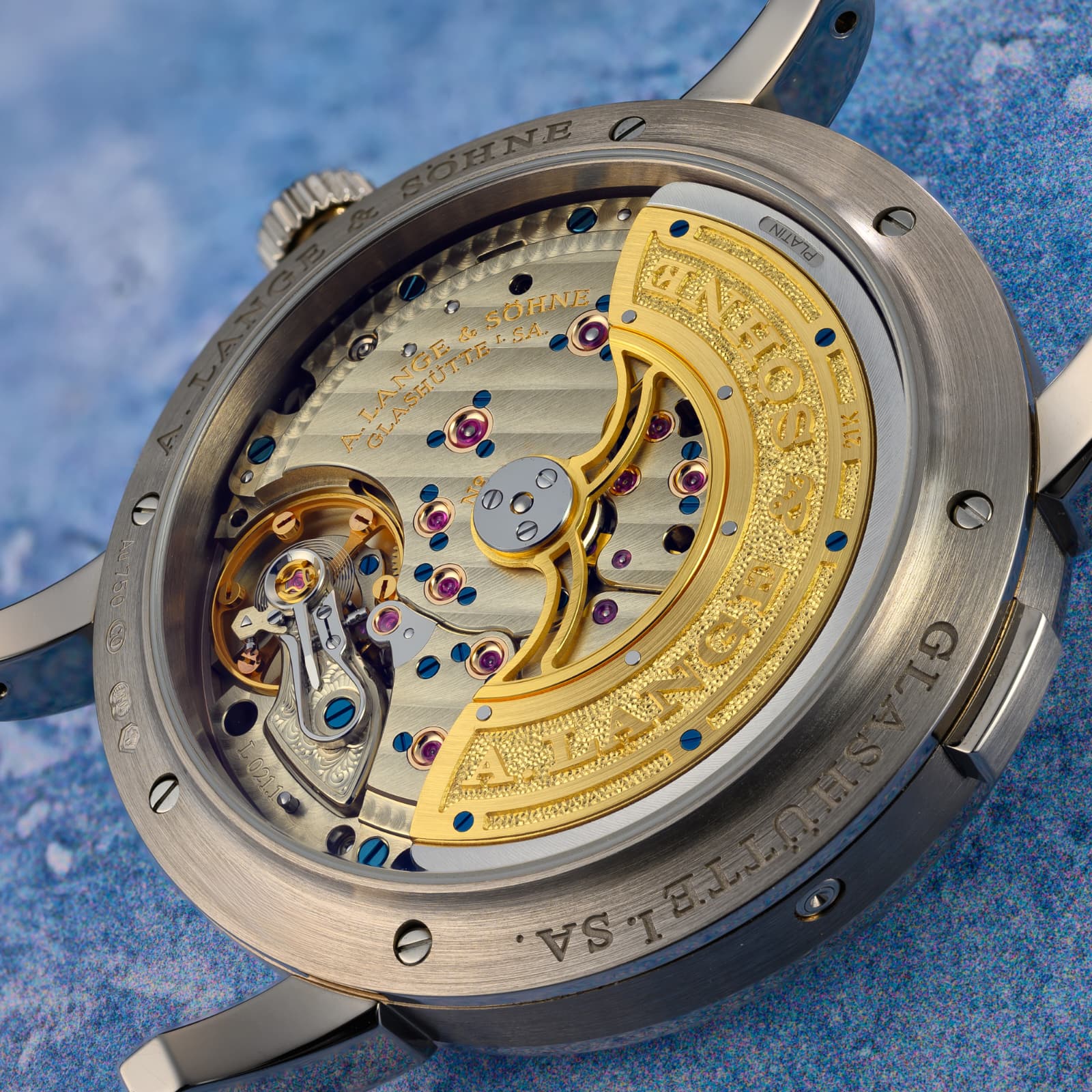
The Caliber L021.1 of the Daymatic.
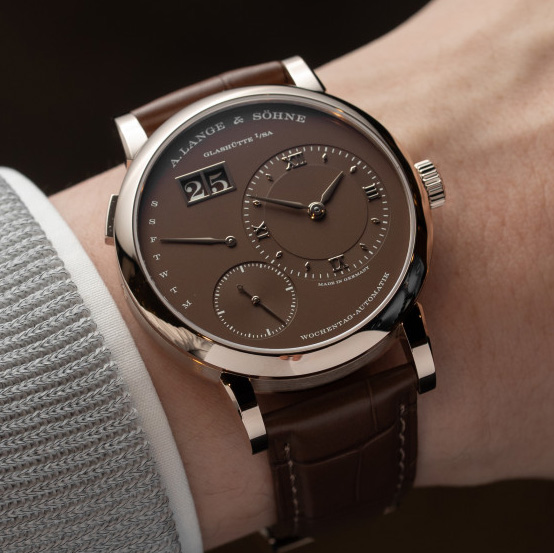
The new Honey Gold Daymatic. Courtesy of waqt.com.
On the wrist, the Daymatic feels natural. For those who own a Lange 1, they are very familiar with that “beyond first-world problem” of not being able to read the hours/minutes unless you pull your sleeve all the way back. The Daymatic immediately shows the crucial information on the right-hand side, without any further posturing. It is a bit hefty, but delightfully present.
A. Lange Söhne Daymatic Market
When introduced in 2010, the Daymatic came with a price tag of $37,000 for the gold and $50,000 for the platinum variants. For comparison, the gold Lange 1 was at $28,000 and the platinum was at $41,000. As with most pieces in A. Lange & Söhne’s catalog, the Daymatic got a significant price bump as the effect of the financial crisis started to wear off around the late 2010s. It rose to $53,000 (320.025) in late 2011, and then to $58,000 in 2013, and remained almost there until it was discontinued.
The Daymatic is not a particularly rare watch, at least within A. Lange & Söhne’s context. That context for me is <100 pieces, so please take the “not rare” statement with a pinch of salt. The collection doesn’t appear much at auctions and mostly trades between pre-owned dealers, such as yours truly. The examples at auctions tend to be very rare editions, such as the 11-piece Oeding-Erdel edition at Wettmann in 2023 that sold for €41,000, or 1 of 3 Japan edition sets sold at Christie’s for €180,000 in 2022.
The Daymatic “Ginza Edition” 25 Pieces.
We can rank the non-standard Daymatic editions from the rarest to most common as follows: 320.028 > 320.021 > 320.025 > 320.032. The pricing hierarchy goes almost hand-in-hand with this ranking, excluding the platinum edition, which commands a premium over the gold variants.
As of June 2026, the blue dial variant usually trades at around the high $40,000s, whereas the platinum variant is around the low $40,000s to high $30,000s, and the gold editions usually range from the mid $20,000s to low $30,000s. The Honey Gold 250 pieces limited edition is introduced at €75,000 in Germany.
I think the Daymatic collection is a bargain for what it is, as with most other modern Lange pieces in the pre-owned market. It is daring, novel, and exquisitely made all around. Just like the Lange 1, it is the platform other pieces are built upon, and if I were a betting man, I would say if we were ever going to see a Lange 1 chronograph, it will be built on this one.
Come to special editions like Ginza Daymatic, the price and attraction suddently skyrockets. An example is the Lange 1 Daymatic “Ginza” Edition, which sat around $100,000 region even before the surge in interest to Lange. Christie’s is going to offer an example in June Auctions, and I am pretty sure it is going to push $200,000 range. I believe the Honey Gold edition with its special case, brown dial is going to have a strong interest and attraction in pre-owned market. This renewed interest to the collection might also bump earlier references.
I hope you enjoyed this article. Please feel free to reach out at al*@********ia.com if you have any further notes or just want to discuss on this piece!
Thank you.