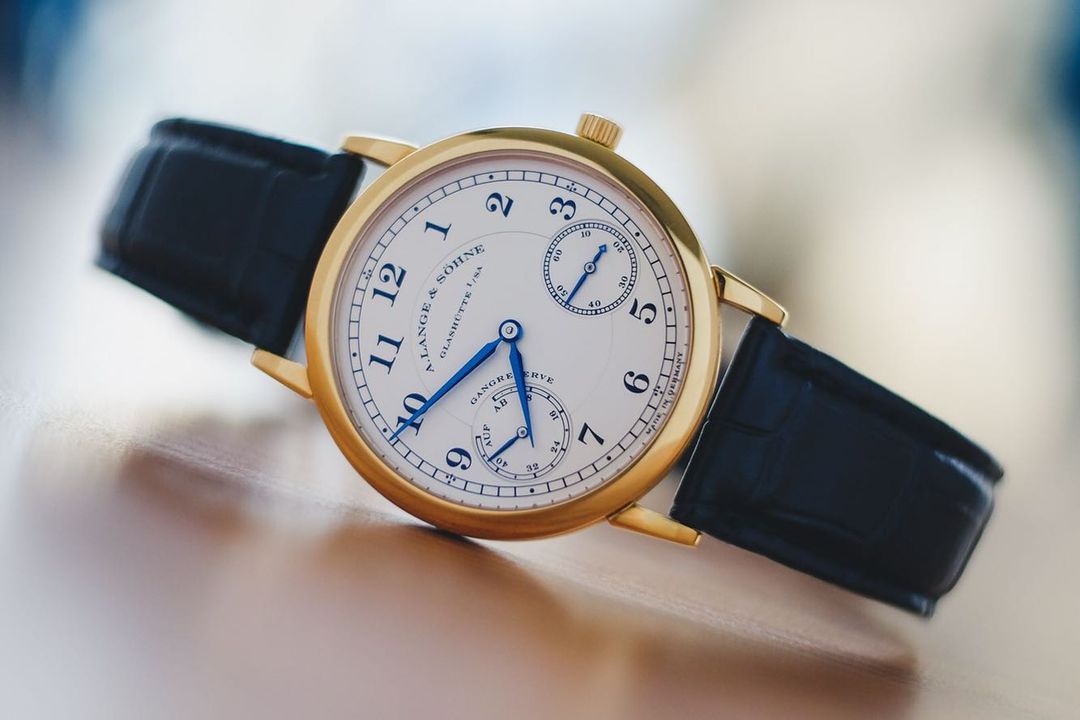
A question many ponder: what is the best entry to A. Lange & Söhne? The decision foremost depends on the allocated budget; however, even if money were not a constraint, what would it be? There are some immediate contenders, of course, such as the Lange 1, Datograph, or Zeitwerk. However, something is missing with these: the history, the heritage, the essence. For all that the mentioned ones do not stand for, this one comes up. For the numerous reasons discussed below, this watch makes a strong case as the best summary of A. Lange & Söhne’s 175 years of existence: the 1815 Up/Down.
As the name implies, the 1815 Up/Down is part of A. Lange & Söhne’s 1815 collection, which was named after the birth year of Ferdinand Adolph Lange, the founder of the brand. Herr Lange was a gifted watchmaker, who worked alongside none other than Gutkaes following his graduation from technical school, and was trained by true masters of the craft such as Winnerl and John Arnold’s atelier during the journey he took towards Switzerland, France, and England to further develop his skills.
Following his journey, he returned to Dresden in 1841 and became partners with his teacher, Gutkaes. However, it was not enough for this young man, and at the age of 30 he laid the foundation of what was to become the Glashütte watch industry. Concordantly, the 1815 collection takes its inspiration from such a man and pays homage to the era’s pocket watches in every detail. The 1815 Up/Down is perhaps the best example.
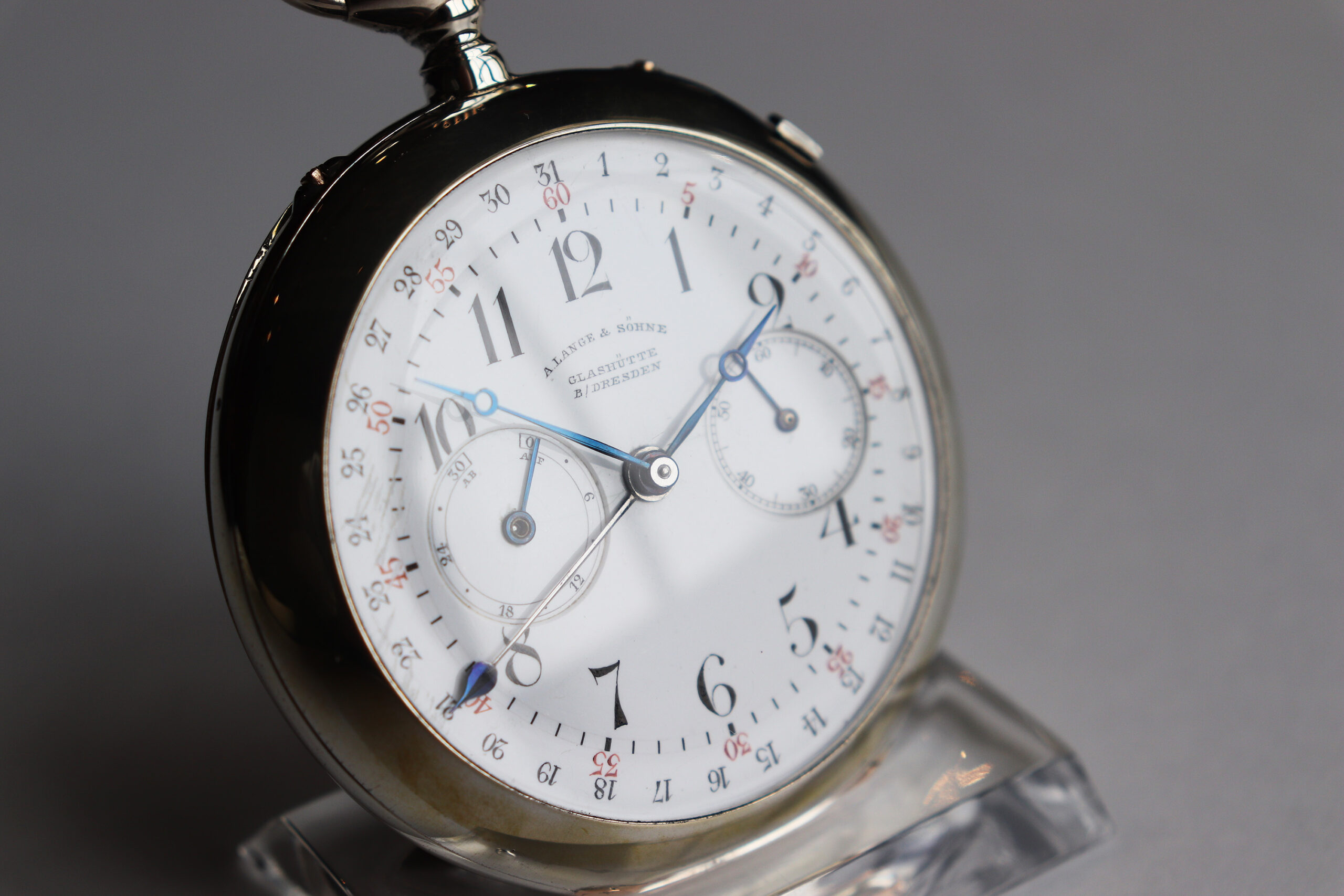
A very special, early A. Lange & Söhne pocket watch with Auf/Ab indication and peripheral date. Seen at Glashütte Watch Museum
The 1815 Up/Down takes its inspiration from patent no. 9349, acquired by A. Lange & Söhne in 1879. The title of the patent translates as follows: Device on pocket watches to detect whether the watch is wound up or wound down, or how long it has to run until it is completely out of time. Through its lifetime, A. Lange & Söhne applied this patent to perhaps hundreds of pocket watches, the last ones being made in the 1940s with steel cases, far from the 1A quality of the 1890s and 1900s.
Being one of the earliest patents acquired by the brand, it only made sense for modern A. Lange & Söhne to make use of such an important part of the heritage, and what is better than the 1815 collection to do so? Hence the 1815 Up/Down, introduced in 1997, is the first expansion model to grace the revered, traditional line.
The First Generation: The Case
In line with the 1990s trend, the first 1815 Up/Down generation had a smaller size at 35.9 mm in diameter and a slender 7.9 mm in thickness. The diameter is the same as the time-only 1815 pieces, with a 0.4 mm increase in heft caused by the power reserve mechanism.
The case construction is classic A. Lange & Söhne, full of witty details that are not apparent at a glance but form the undeniable Lange character and the noticeable distinction from the Swiss, as intended by Blümlein. The 1815 Up/Down case is built on three steps, being the case back, case band, and bezel, with alternating polishing and brushing. This brings much-needed contrast to the case. Moreover, the brushed section gives that raw metal feeling in between the polished rings, and delivers the first step of that famous engineered feeling of the brand’s cases.
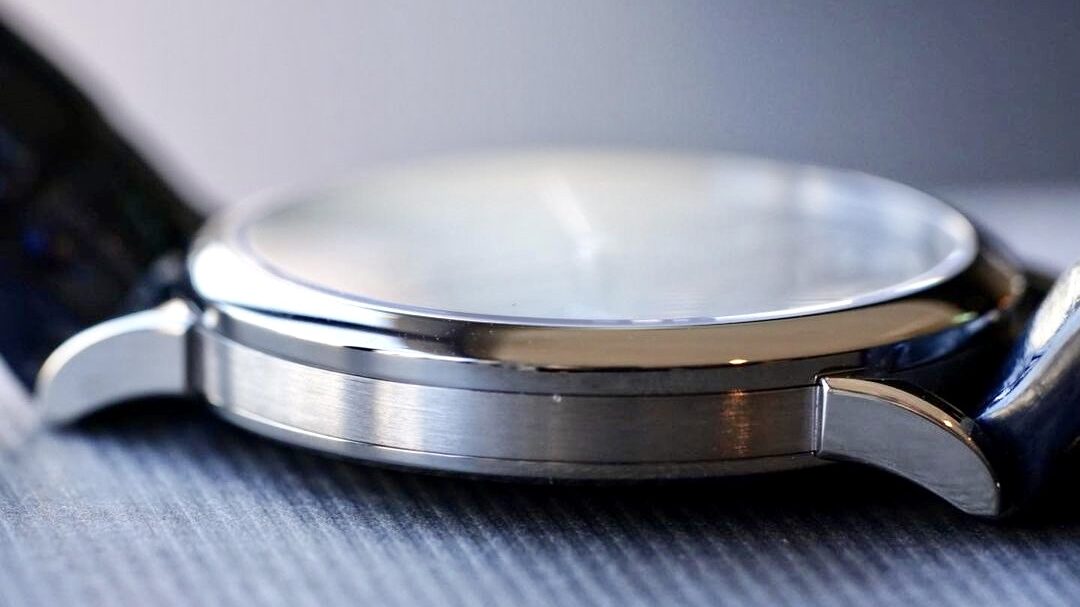
Brilliant capture of the 221.027 – thanks to my friend @penny_watch_story
Another delightful detail of the 1815 Up/Down, or any other Lange case for that matter, is the lugs. A genius touch implemented by Günter Blümlein, Lange cases feature notched lugs which complete the “constructed” look of the pieces, one of the brand pillars of A. Lange & Söhne. The sides of the lugs are polished and stand against the brushed center very well. Unfortunately, pre-2018 pink gold cases of the brand feature a polished case band, and hence lack such a distinct image formed by the alternating finish.
The crown is rather small, but fairly proportionate, and I have no trouble operating it at all.
The first generation of the 1815 Up/Down collection consists of the following references:
| Reference | Configuration | Production |
|---|---|---|
| 221.021 | Yellow gold case / argenté dial | 1997–2008 |
| 251.021 | Yellow gold case / yellow gold bracelet | 1997–1998 |
| 221.025 | Platinum case / argenté dial | 1997–2008 |
| 251.025 | Platinum case / platinum bracelet | 1997–1998 |
| 221.027 | White gold case / blue dial | 1997–2001 |
| 221.032 | Pink gold case / argenté dial | 2001–2008 |
The 1815 Up/Down is a no-nonsense watch in every aspect. It is subtle, highly legible, useful, and perhaps most importantly, incredibly charming. From the thickness of the fonts used to the abundant white space, the watch delivers a feeling of serenity. The 1815 Up/Down is the encapsulation of 175 years of A. Lange & Söhne history in 36 mm.
The 1815 collection is such a strong template that no matter what is added on top, its character is ever present. From the €1.92 million Grand Complication to the €15k time-only model, a glance is enough to understand that they both belong to the same collection. The collection overall is a masterclass in modernizing a century-old design. Its hallmarks are very much apparent in the 1815 Up/Down too.
The railway minute track surrounds the dial and forms a border for the closed, subtle design. The rather wide gap between the bezel and the track also contributes to the purity of the dial. Every 5 minutes is marked with a thick dot, and every 15 minutes with three dots, reminiscent of the Saxon floral pattern on the famous porcelains of the region.
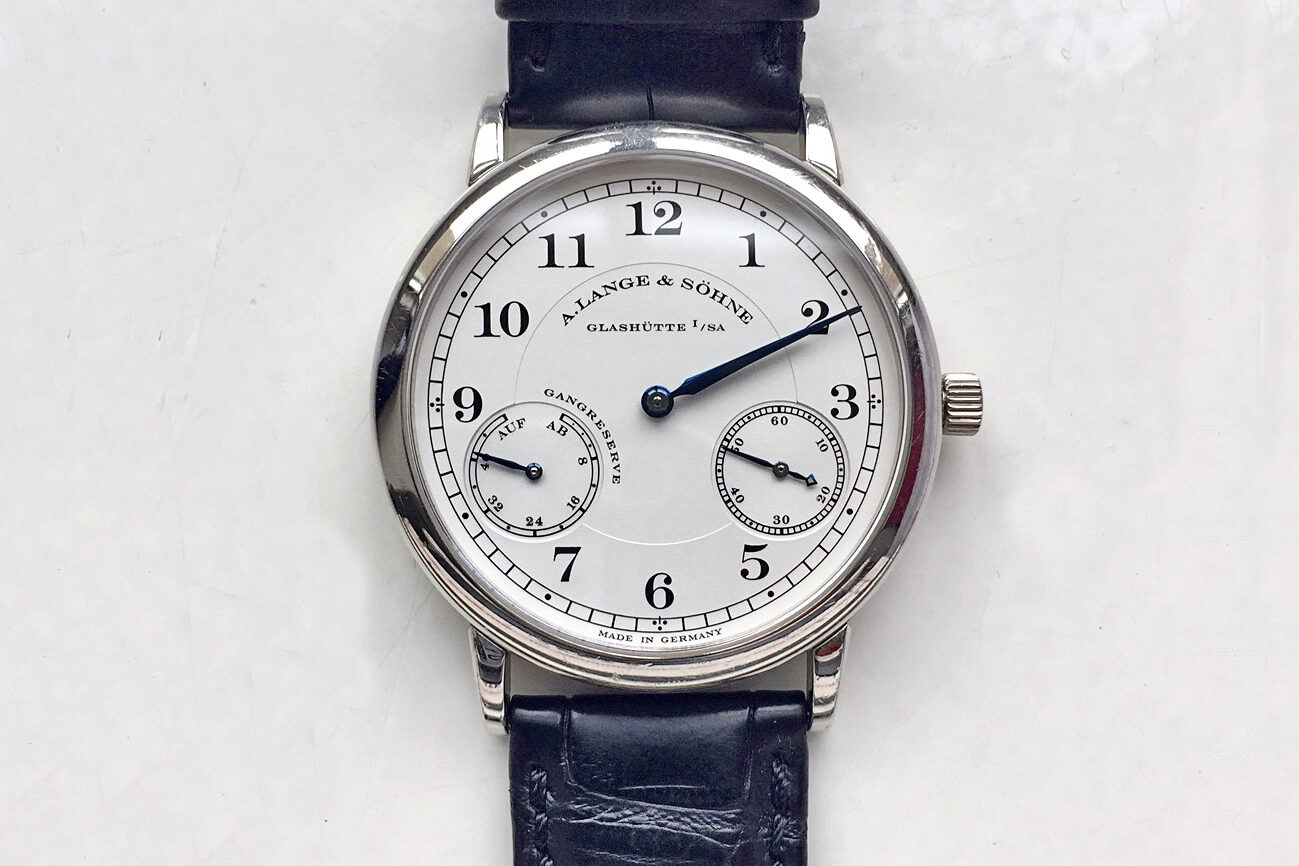
221.025 in platinum – overlapping hands, not a regulator
Then we have the modernized Arabic numerals, a signature of every 1815 collection watch, thickly printed with the custom font developed by A. Lange & Söhne. As we move towards the center, the dial moves within steps too. The center part of the dial is a bit recessed, giving much-needed depth to an otherwise plain dial, and the sub-dials step down even further and separate themselves from the rest.
The most distinct detail of the 1815 Up/Down is the lowered sub-dials, with the power reserve (Auf, wound / Ab, empty) indication on the left and the running seconds on the right. Now, many watch blogs write that this is inspired by 19th century A. Lange & Söhne pocket watches. However, this is a false statement.
All of the Auf/Ab pocket watches of the brand feature centered sub-dials, and most examples are from the 1940s, when Otto Lange gave the indication its final form. So the lowered sub-dials of the 1815 Up/Down are just a basic design choice, perhaps to give the watch a distinct feel, as most brands tend to center them. This arrangement also led the way to the 1815 Moonphase Emil Lange in 1999, the 1815 Sidestep, and the 1815 Chronograph.
I just love the symmetry-breaking Gangreserve inscription above the power reserve indication. It reminds me of the Sax-0-Mat on Langematik pieces, a touch that saves the watches from an otherwise monotonous appearance. I also love that everything on the 1815 Up/Down dial, from the Gangreserve (power reserve) to Auf/Ab, except the “made in Germany” at the bottom, is written in German. It gives so much coherent character to the 1815 Auf/Ab. The sub-dials are rather small and cornered, but they do not cut any of the numerals.
While the yellow gold and platinum references carry blued steel hour and minute hands, the pink gold and white gold references carry pink gold and white gold hands respectively. All editions feature blued power reserve and seconds hands.
The harmony between elements is astonishing. It is traditional, but far from boring, and carries an essential story from the past. In my opinion, the first generation of the 1815 Up/Down is one of the best gateways to A. Lange & Söhne.
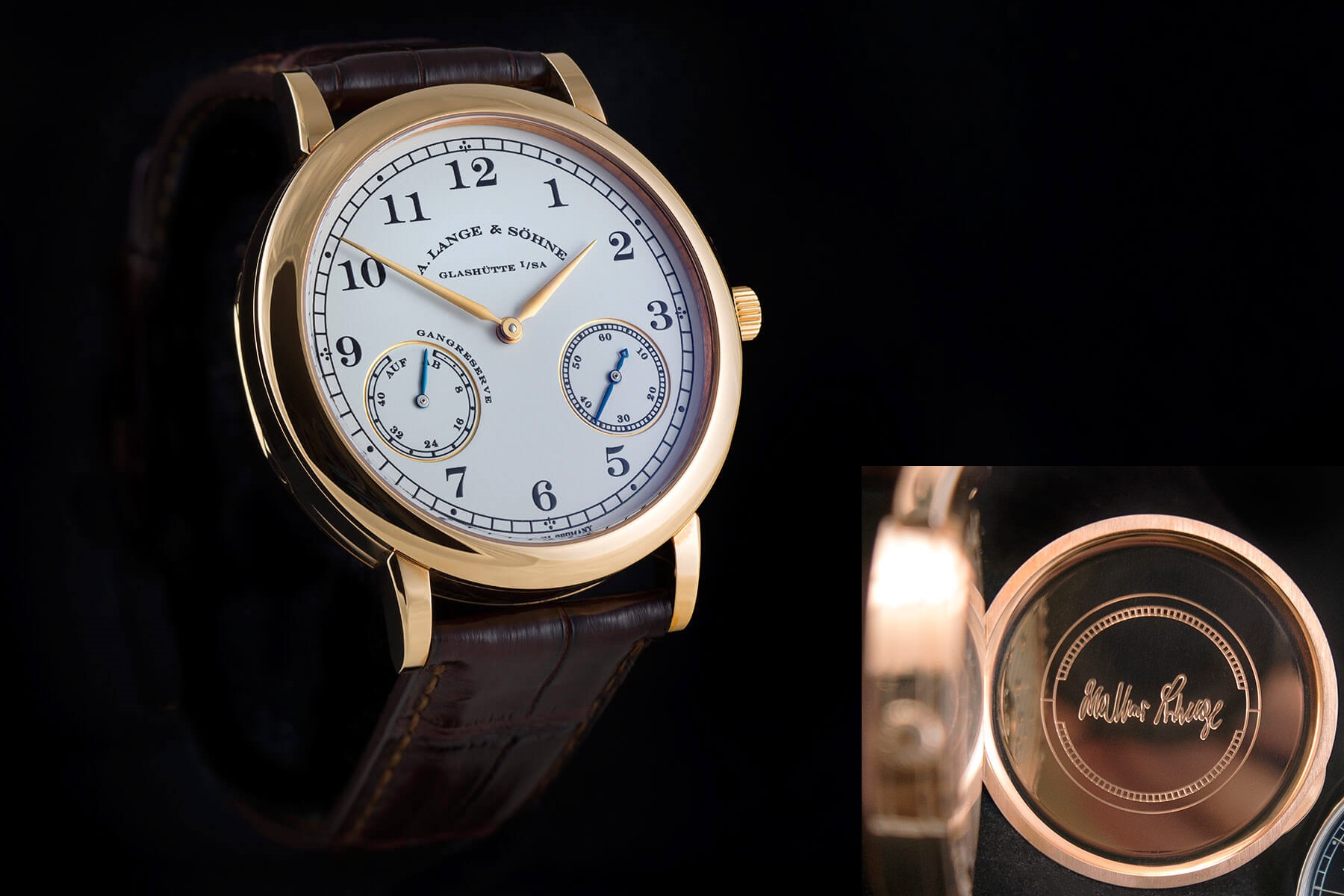
Apart from the standard editions covered above, the first generation 1815 Up/Down also had one special edition, and it was for none other than Walter Lange. A. Lange & Söhne introduced the model in pink, yellow, and white gold in 2006, only through US points of sale. As differences, the 1815 Up/Down Homage to Walter Lange watches measure 37.5 mm in diameter, have a gold ring surrounding the power reserve indication, and a hinged, mirror-polished case back with Walter Lange’s signature inside. A very special edition indeed.
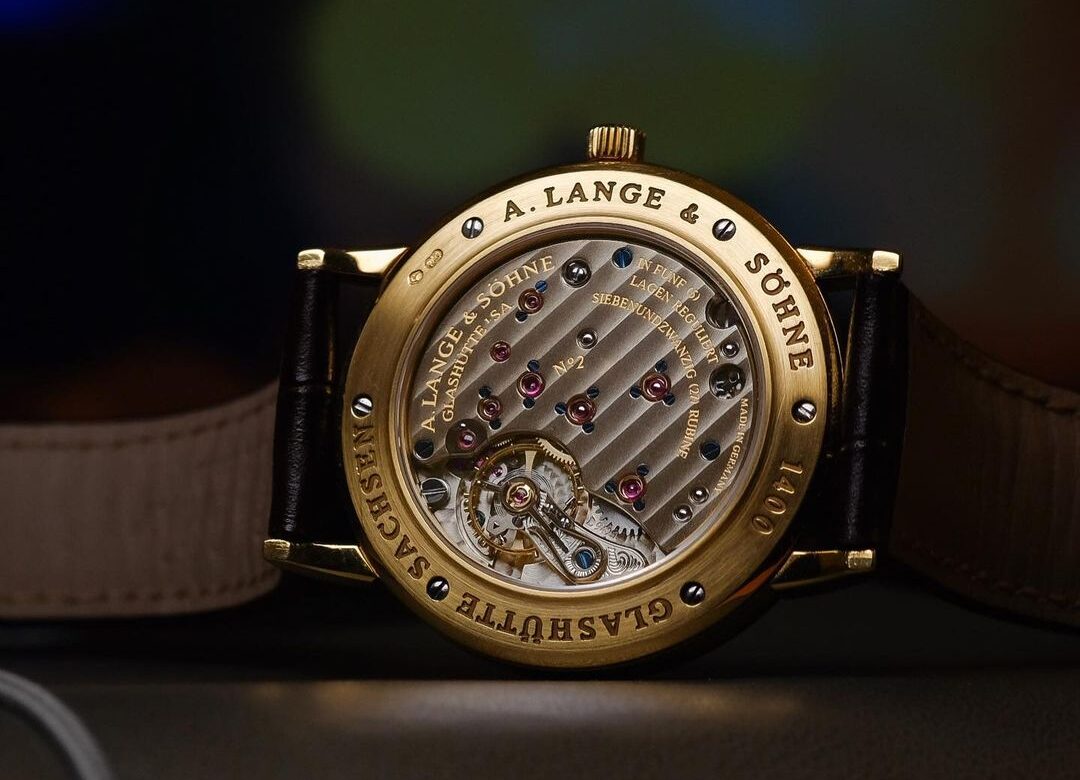
Caliber L942.1
I’d like to start with the words of Walt Odets on the 1815 Up/Down from 1998, hence on the caliber L942.1. He is probably the best ever to bless the internet with watch articles, and he summarizes the movement as a “quirky, old-new masterpiece” that is not, in his words, a contribution to furthering the technical development of the mechanical watch. His point is that if you want traditional German charm, beautiful execution, and robustness in a simple hand-wound watch, nothing else matches the 1815; but if honest, function-driven contemporary engineering matters to you, he would point instead to a Lange automatic, the Chopard caliber 1.96, or one of the free-sprung Patek calibers.
As with the 1815 Up/Down’s dial side, its movement is a miniaturized pocket watch from the 19th century. It is as beautiful and charming, with superbly executed details in every inch. The caliber L942.1 is based on, and visually identical to, the 1815’s caliber L941.1, with an additional power reserve mechanism. It beats at 3 Hz, houses a power reserve of 45 hours, and features a hacking seconds mechanism.
Like all other Lange hand-wound movements of the era, the L942.1 comes with a three-quarter plate. The function of the plate is to provide a single shelter for the upper pivots of all mechanisms, hence making the caliber more stable. Originally a British invention, the plate was given its final form by Ferdinand Adolph Lange in 1864, and since then it has been the defining hallmark of A. Lange & Söhne, as well as of every manufacture from Germany.
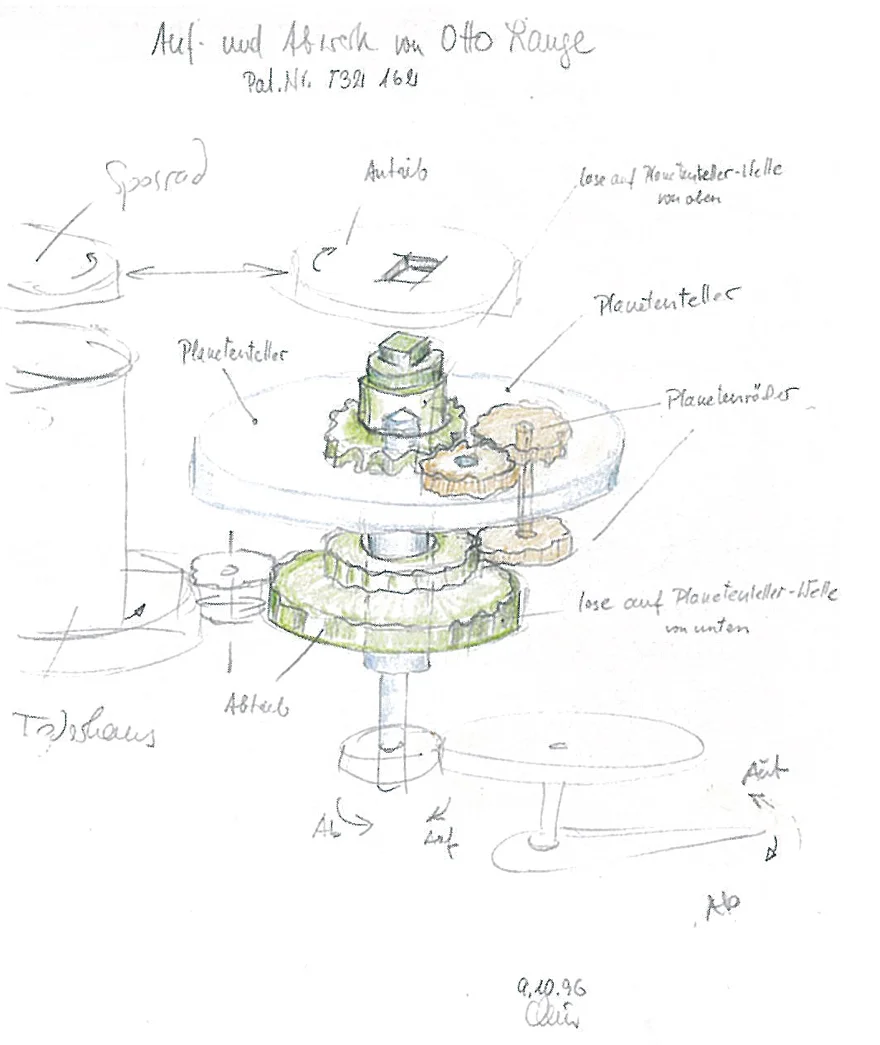
From Reinhard Meis’ book Great Timepieces of Saxony – Lange Uhren GmbH
Walt Odets’ comment is truly spot-on. Visually, the caliber L942.1 is an old-new masterpiece. From the gold chatons to the hand-engraved balance cock and the overall architecture of the movement, it is almost an exact replica of a pocket watch movement crafted with the highest care. This is exactly why I call the 1815 Up/Down a summary of A. Lange & Söhne’s 175 years of watchmaking in 36 mm. Inside out, it is an extremely coherent watch.
To explain the drawing: the upper differential wheel is driven directly by the ratchet wheel, while the intermediate wheel transfers power from the barrel to the lower differential wheel. Winding the watch turns the differential axle counterclockwise; running the watch turns it clockwise, as the mainspring barrel takes over. The power reserve display rises and falls accordingly.
The advantage of such a construction is that the power reserve mechanism does not require extra space, hence A. Lange & Söhne managed to implement it in the basic L941.1 without adding much thickness.
221.021 in all its beauty – Courtesy of my friend Michael
1815 Up/Down Second Generation
A. Lange & Söhne discontinued the 35.9 mm 1815 Up/Down collection in 2008 and did not replace it until 2013. When the collection arrived once again, it was completely transformed in almost every aspect, from the dial to the case and mechanism. It was modernized.
Looking at the bigger picture, there have been many updates within the A. Lange & Söhne catalog in the first half of the 2010s: Datograph Up/Down, Datograph Perpetual, Double Split, and others. All of these watches follow almost the same template, removing what reads as old and complex and bringing in what is familiar, Roman numerals replaced with baton indices being the obvious example.
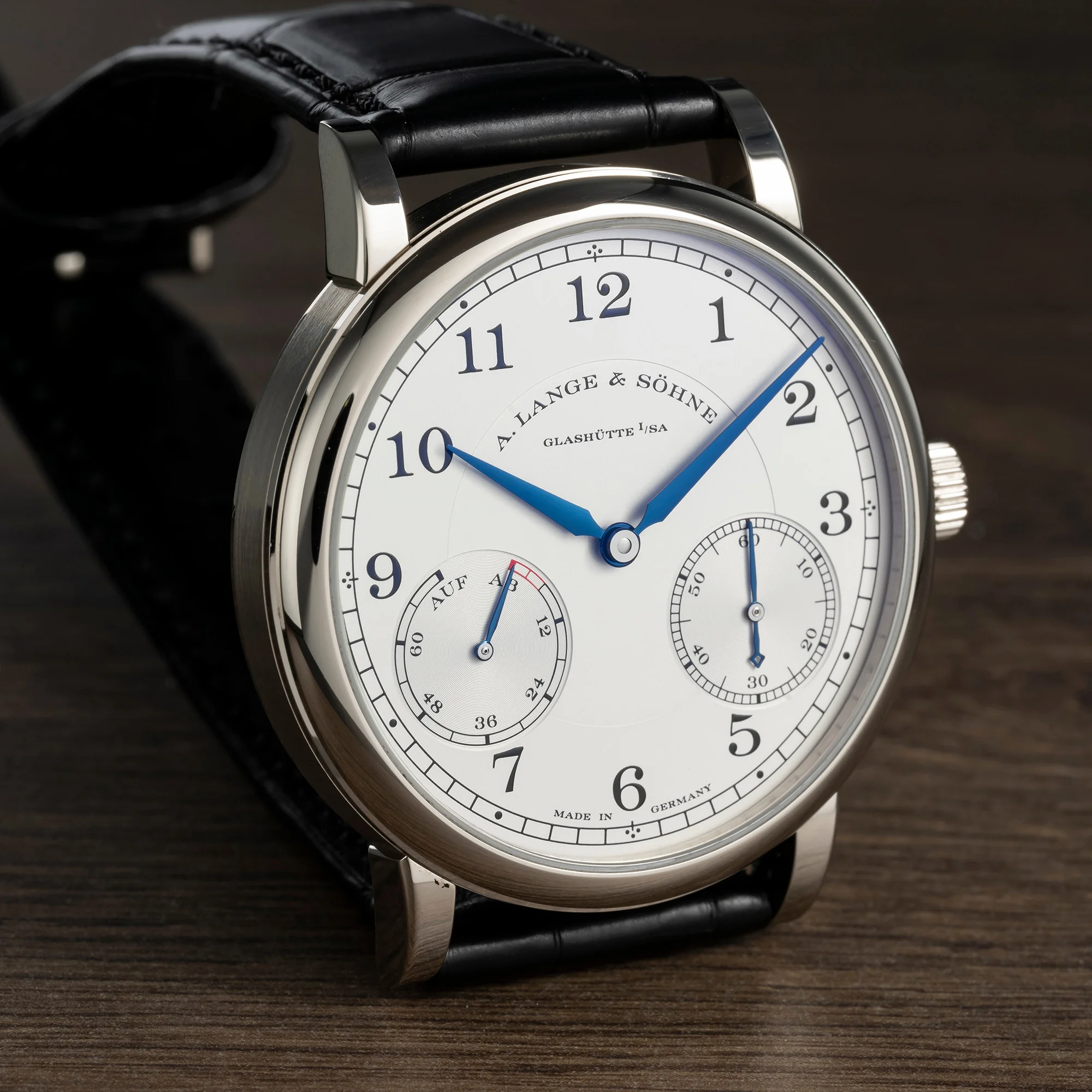
The new 234.026 with updated proportions, and striking details. Sold at The Selection
The same effect is also apparent in the 1815 Up/Down’s second generation. It is an absolutely beautiful and alluring collection, but does it lack the soul the first generation has? It is certainly more proportionate and legible, but not as quirky.
A. Lange & Söhne introduced the updated 1815 Up/Down collection in pink and white gold. A series of differences between the first and second generation reveal themselves from the case. The new 1815 Up/Down measures 39 mm in diameter and 8.7 mm in thickness, 3.1 mm wider and 0.8 mm thicker than the previous generation. Though the structure is the same as the first generation, the updated 1815 Up/Down carries a stepped bezel. This breaks the solid appearance and hides the additional thickness very well.
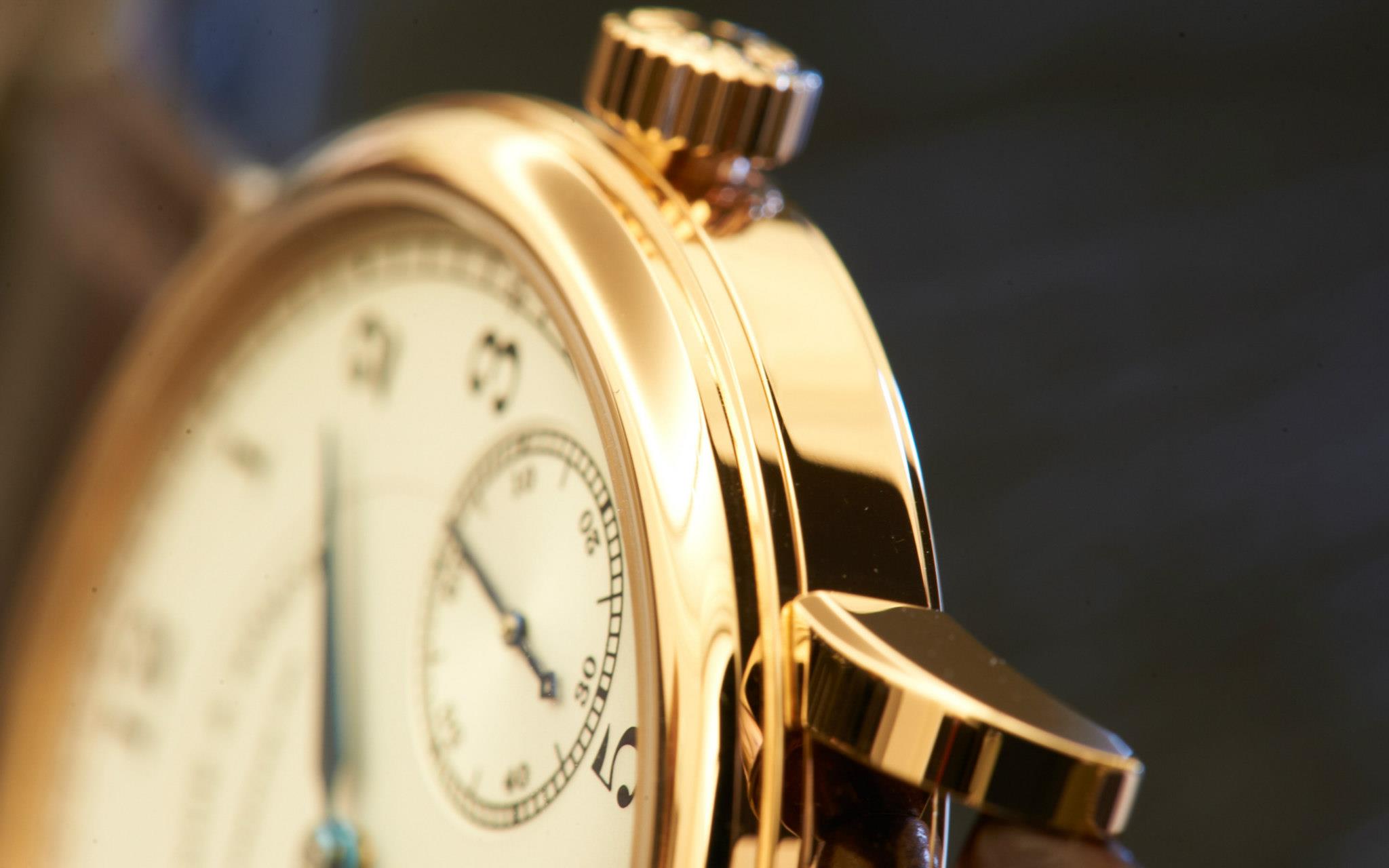
Please note the stepped bezel on this 234.032
Caliber L051.2
In order to accompany the bigger dial size, and due to the removal of the Gangreserve inscription, the second generation 1815 Up/Down carries much bigger sub-dials. This gets them closer both to the center and to each other, which takes away from the spacious appearance of the first generation and creates a rather cluttered look. For example, in reference 221.021 the sub-dials’ top edge was still below the center, whereas in the new 1815 Up/Down they go above it. The “7” and “5” are slightly eaten too, so things overlap.
All said and done, I do not think anyone can argue against the temptation of this dial. It is traditional watchmaking done to perfection. The thickness of the print, the character of the font, the layers on the dial, the concentric circles within the sub-dials, and the harmony of those majestic blued hands with the dash of red on the power reserve indication are all sublime.
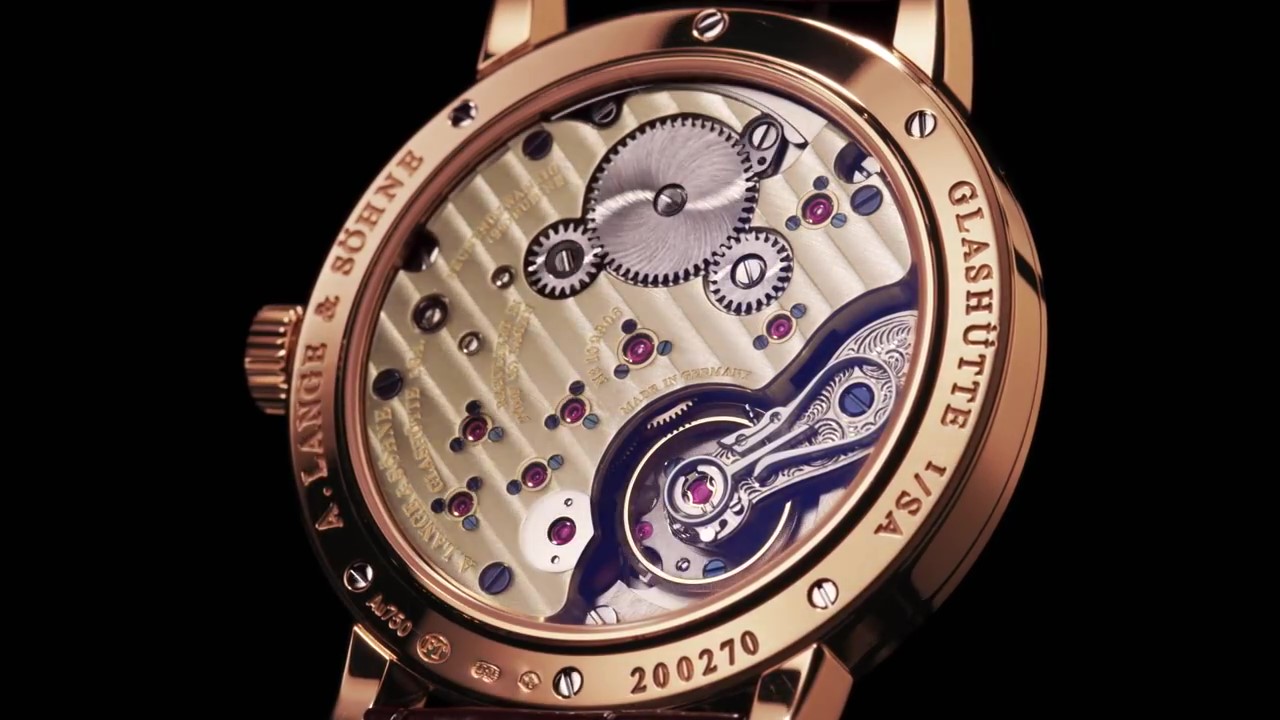
Caliber L051.2. Courtesy of Lange Uhren GmbH
The new 1815 Up/Down shows its biggest update on the movement side. It is still based on the basic 1815 caliber L051.1, but manages to differentiate itself both technically and visually, and in the right way.
The caliber L051.2, even though it uses the same base as the basic 1815 pieces, offers an updated power reserve of 72 hours. Even though this means you are going to use the power reserve indication less than in the previous generation, it is a profitable trade-off. Moreover, the new 1815 Up/Down comes with an in-house balance spring and wheel.
Speaking of the power reserve, when the watch depletes its three-day reserve, the seconds hand always stops at zero. Another genius detail that reminds me why I love Lange. When asked why they did this, the answer always comes as “because we can.”
The caliber L051.2 also brings a great visual departure from its base. The 1815 Up/Down is the first watch from the 1815 collection to have an exposed ratchet wheel and click spring, which are usually hidden beneath the plate. I touched upon this subject in the 1815 Time-Only article and asked whether A. Lange & Söhne chases tradition where it is cheap, because these elements were exposed in all the pocket watches of the past, and for me it was, and still is, illogical to hide them.

Final touches. Courtesy of Lange Uhren GmbH
The wheels are beautifully finished and bring much more attraction to the otherwise plain three-quarter plate. Of course, the plate is striped to perfection as usual, and the color harmony between the numerous gold chatons, blued screws, and the German silver’s hue is astonishing.
A final note about the caliber L051.2 concerns its winding feel, which is quite similar to the Saxonia Thin. It is just not so smooth, for some reason. It is possible that A. Lange & Söhne squeezed a longer mainspring inside the same barrel size from the L051.1, and this negatively affects the winding. Though I must say my impression is that it is unsatisfactory only within a Lange context, not in general comparison.
The Third Generation: 37,5 mm 1815 Up Down
A. Lange & Söhne updated the 1815 Up/Down again in 2026, with the references 244.037 in pink gold and 244.028 in white gold. Both carry blue dials and are limited to 300 pieces each.
The headline change is the size. The new 1815 Up/Down measures 37.5 mm in diameter, down from the 39 mm of the second generation, while the thickness stays at 8.7 mm. This lands it between the two earlier generations, and closer to the 37.5 mm of the Homage to Walter Lange edition from 2006. An update was long overdue and I welcome the size change. The 39 mm case was never wrong, but the 1815 template has always looked most comfortable in the mid-thirties, and this brings the collection back to where it reads best.
The other change worth noting is on the pink gold case. As covered above, pre-2018 pink gold cases from the brand carried a polished case band, which cost them the contrast that defines a Lange case. The new 244.037 is brushed, so the pink gold reference finally gets the alternating finish the platinum and white gold references always had. It is a small correction and it should have happened years ago, but it is good to see it done.

Prize who can guess whether this is Wempe Edition or New Generation
Beyond that, the watch is very close to the 1815 Up/Down Wempe edition from 2019. Not similar in spirit, but close to one for one. Given that I called the Wempe the best special edition of the second generation, I am not going to complain about the direction. It does mean that the third generation arrives with a design that was already shown seven years ago, and as a regular collection piece rather than a 25-piece run through one retailer.
From the press images, the fonts appear slightly thinner and the sub-dials a touch brighter than the second generation. Both are the sort of thing that photographs unreliably, so I will hold off until I see one in metal.
The movement is the caliber L051.2, unchanged from the second generation. It measures 30.6 mm in diameter and 4.6 mm in thickness, runs at 21,600 vph with 29 jewels, and holds 72 hours of power reserve. Everything covered in the caliber section above still applies, including the seconds hand stopping at zero when the reserve runs out. A 30.6 mm movement inside a 37.5 mm case is a good ratio, and one of the reasons the smaller size works rather than looking compromised.
Price is €44,700, and both references are available now.
The one thing I keep coming back to is the limitation. The 1815 Up/Down has been a regular production model in both previous generations, and 300 pieces per metal is a departure from that. For now, I do not know whether the regular production continues.
All in all, this is a lovely watch at a lovely size, and the size alone justifies the update. What it does not have is inspiration. It takes a design the brand already made in 2019, corrects a case finishing issue that should never have persisted, and puts a limitation on it. A foray into smaller size, and a new edition after almost 15 years, I would have expected more, alas…
1815 Up/Down Wempe, Cellini, Suarez
Apart from its regular production versions, A. Lange & Söhne offered three special editions of the new 1815 Up/Down collection for selected retailers in various regions. In my opinion, among these three, Wempe easily takes the crown, while the other two suffer from not being special enough, as most special editions since 2015 do.
The first special edition was made for Cellini’s 40th anniversary in 2017. A long-time business partner of A. Lange & Söhne, Cellini is family-owned and deservedly one of the most famous retailers in North America. To celebrate, A. Lange & Söhne introduced the 1815 Up/Down Cellini edition, limited to 40 pieces, with a lacquer dial, a first for the brand. Moreover, the “40” inscription in the seconds sub-dial is printed in red. Apart from these two details, the Cellini edition is an exact copy of the white gold reference. Pieces are not individually numbered but inscribed as “40 PCS.” on the case back. The 1815 Up/Down Cellini asks a $2k premium over the regular white gold version.
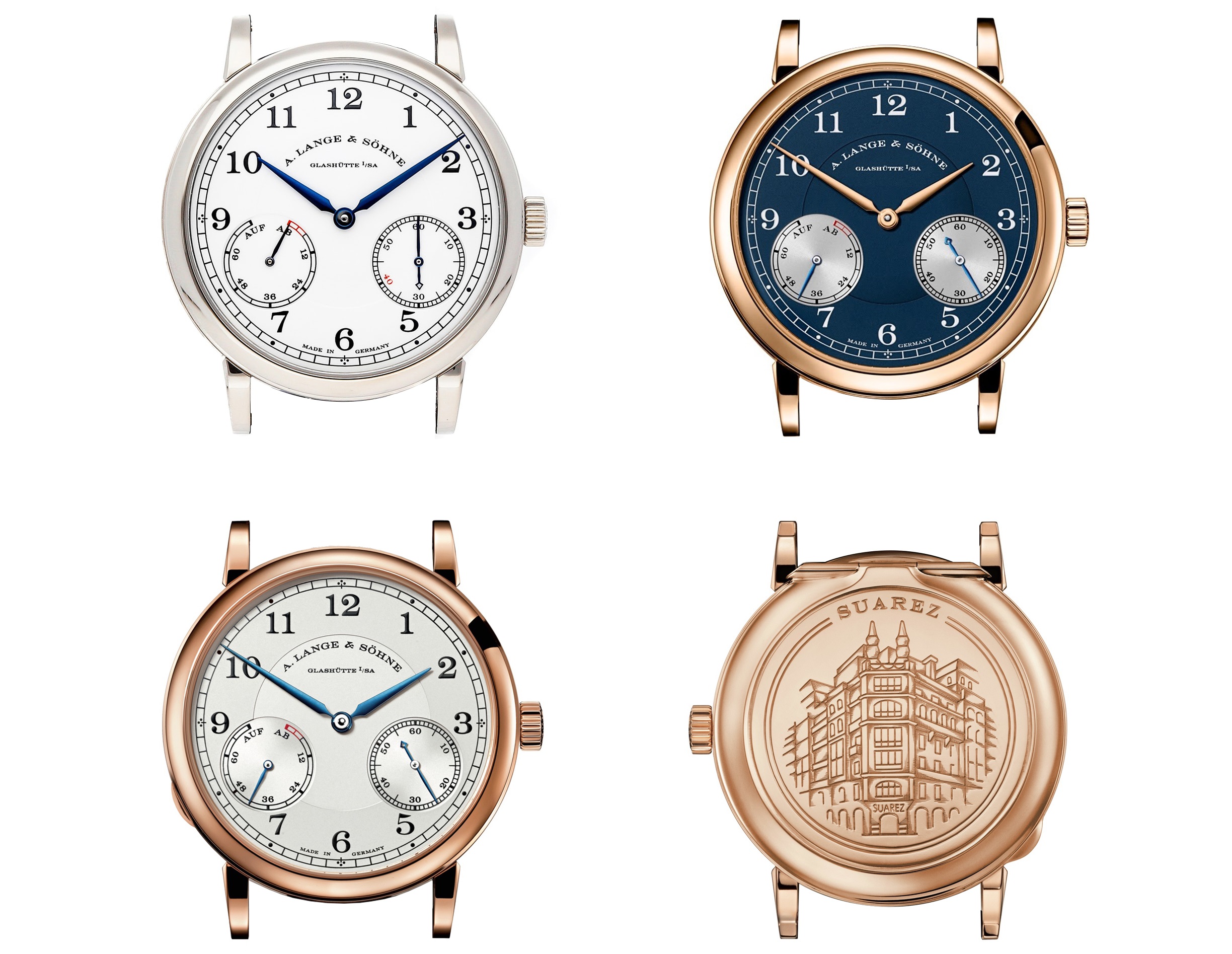
Cellini Edition (top left), Wempe Edition (top right), Suarez Edition (bottom)
The 1815 Up/Down Suarez Edition was launched in 2018 for the 75th anniversary of the jeweler Suarez in Spain. The special edition is an exact copy of the pink gold version with a machine-engraved hinged case back, picturing the historical building of the jeweler in Bilbao. It is limited to 20 pieces and asks a €6k premium over the regular pink gold version. Each piece is individually numbered.
The 1815 Up/Down Wempe was launched in 2019 and, to me, except for the Homage to Walter Lange edition, is the best special edition of the collection. It is daring, brings something new, and appears as a special edition without requiring you to go into the smallest details to understand that it is different. The references 234.032 and 234.026 were produced in pink and white gold respectively, each metal limited to 25 pieces and distributed through Wempe stores around the world. Each piece is individually numbered.
Buying an 1815 Up/Down
When the first-generation 1815 Up/Down debuted in 1997, its MSRP was about $12,000 for gold versions and $17,000 for platinum. Over the next eleven years, prices rose by roughly $5,000, a steep percentage jump, yet understandable given the brand’s momentum.
By June 2025, this original 36 mm model has benefited from the broader neo-vintage boom. Before 2020, examples often traded between $15,000 and $25,000; today the spread is far wider.
- Yellow gold / silver dial (221.021): still available around $18,000–$22,000.
- White gold (221.027) and platinum (221.025): these have surged. At their 2023 peak, the blue-dial white gold version touched $40,000, with platinum close behind. As of September 2026, the blue-dial model hovers in the high $30,000s, or even above $40,000 while platinum sits in the mid-to-low $30,000s.
The second (current) generation 1815 Up/Down, no matter the reference (except limited or special editions), can be found in the mid-$20,000 range. In my opinion, a tremendous bargain.
Concluding Words
The 1815 Up/Down is traditional German watchmaking done very well. Every detail is meticulously thought out (perhaps except the eaten 7 and 5 in the second generation) and crafted with the highest care. All the variations of the line reflect a true character and have a charm of their own.
No matter the generation, the 1815 Up/Down can very well be the start of the journey to A. Lange & Söhne, simply because it houses all the important elements from the past but manages to fuse these with modern touches in every detail. The model is a distillation of the brand, and I can only advise you to go for it. You are never going to get bored of it.